

If you’ve ever caught yourself hunched over your phone for what feels like “just a few minutes” — only to look up and realize an hour has passed — you already know the pull of screen time. What you might not realize is what that downward gaze is doing to your neck and spine. Here in Sunnyvale, CA, more and more patients are walking through the doors of Revive Chiropractic with the same complaint: nagging neck pain, stiffness between the shoulder blades, and headaches that seem to come from nowhere. In many cases, the culprit is something we now call text neck. It’s a modern problem — and it’s far more serious than most people think.
What Is Text Neck?
Text neck is a term used to describe the strain and overuse injury that results from holding your head in a forward, downward position for extended periods — most commonly while looking at a phone, tablet, or laptop. The human head weighs about 10 to 12 pounds in a neutral position, but as you tilt your head forward, the effective load on your cervical spine increases dramatically. This prolonged stress on the muscles, ligaments, and vertebrae of the neck can lead to pain, stiffness, and over time, structural changes to the spine itself.
The Biomechanics: What Happens to Your Spine When You Look Down
To really understand text neck, it helps to think about how the cervical spine is designed. Your neck is built to carry the weight of your head in a balanced, upright position. When your ears are aligned over your shoulders and your chin is parallel to the ground, the joints and muscles of your neck share the load evenly. This is your natural, healthy alignment.
The moment you tilt your head forward — say, 30 degrees to glance at your phone — that load increases significantly. At a 45-degree tilt, the forces acting on your cervical spine are compounded even further. This isn’t just about muscle fatigue. Sustained forward head posture changes the way weight is distributed across the discs and joints of your neck. Over time, this uneven pressure can accelerate disc wear, reduce the natural cervical curve, and create a cascading effect all the way down into the mid-back and shoulders.
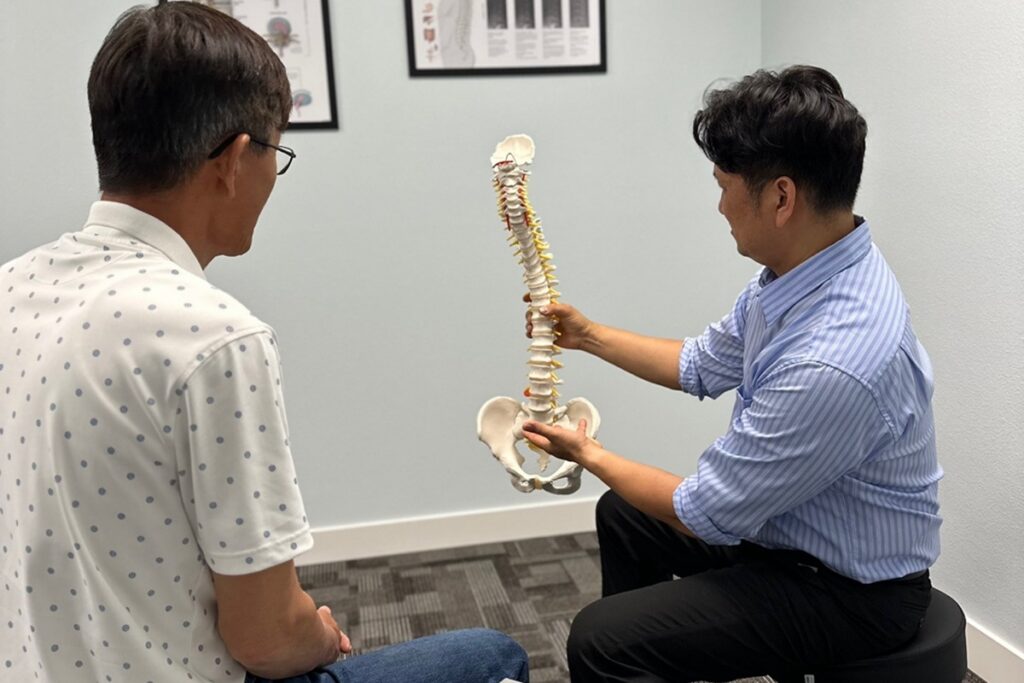
Dr. Jae ho Roh at Revive Chiropractic often explains this to patients using a simple analogy: imagine holding a bowling ball close to your body versus extending your arms out in front of you. The ball weighs the same either way, but it feels much heavier when it’s out in front. Your head works the same way. The further it drifts forward, the more your spine has to work to keep it up — and that effort takes a toll over time.
Common Symptoms of Text Neck
One of the reasons text neck can sneak up on people is that the symptoms often start out mild. You might chalk it up to sleeping in an awkward position or a stressful week at work. But if these signs keep coming back, your posture habits may be the root cause.
Neck pain and stiffness are the most obvious warning signs. This often presents as a dull ache at the base of the skull, along the sides of the neck, or across the tops of the shoulders. Many people notice that their neck feels tighter by the end of the day — especially after long stretches of screen time. That tight, knotted feeling is your muscles telling you they’ve been working overtime.
Headaches are another very common complaint. When the muscles at the back of the neck become chronically tense, they can trigger tension headaches that radiate from the base of the skull up toward the forehead or temples. If you find yourself reaching for pain relievers after a long stretch of phone use, text neck may be contributing.
Upper back and shoulder pain often accompany neck discomfort as well. Because the muscles of the neck and upper back work together to support your head, strain in one area tends to ripple outward. Some patients also experience tingling or numbness that travels into the arms or hands — a sign that nerve irritation may be involved, and a clear signal that it’s time to get evaluated.
Long-Term Effects If Left Untreated
Text neck isn’t just a nuisance — it’s a condition that can have lasting structural consequences when ignored. One of the most concerning long-term effects is the loss of the natural cervical curve. A healthy cervical spine has a gentle inward curve (called a lordosis) that acts as a shock absorber. Persistent forward head posture can gradually flatten or even reverse that curve, putting abnormal stress on the discs and vertebrae.
Over time, this can contribute to early disc degeneration, the development of bone spurs, and increased risk of herniated discs. These are conditions that go well beyond neck stiffness — they can lead to chronic pain, reduced mobility, and in more serious cases, nerve compression that affects the arms and hands.
There’s also a postural ripple effect to consider. When your head drifts forward, your upper back tends to round, your shoulders roll inward, and your lower back may compensate by increasing its curve. This chain reaction can affect your entire musculoskeletal system, leading to pain in areas you might never associate with your phone habits.
At Revive Chiropractic in Sunnyvale, Dr. Jae ho Roh sees patients across all age groups dealing with these effects — and a significant number of them are surprised to learn that their posture during screen time is at the heart of the problem. The encouraging news is that when text neck is caught early, a great deal of that damage can be addressed before it becomes permanent.
How Chiropractic Care Fits In
Chiropractic care offers a non-invasive, drug-free approach to addressing the pain and structural issues associated with text neck. At Revive Chiropractic, the goal isn’t just to relieve discomfort in the moment — it’s to identify what’s happening in the spine, correct misalignments, and support long-term postural health.
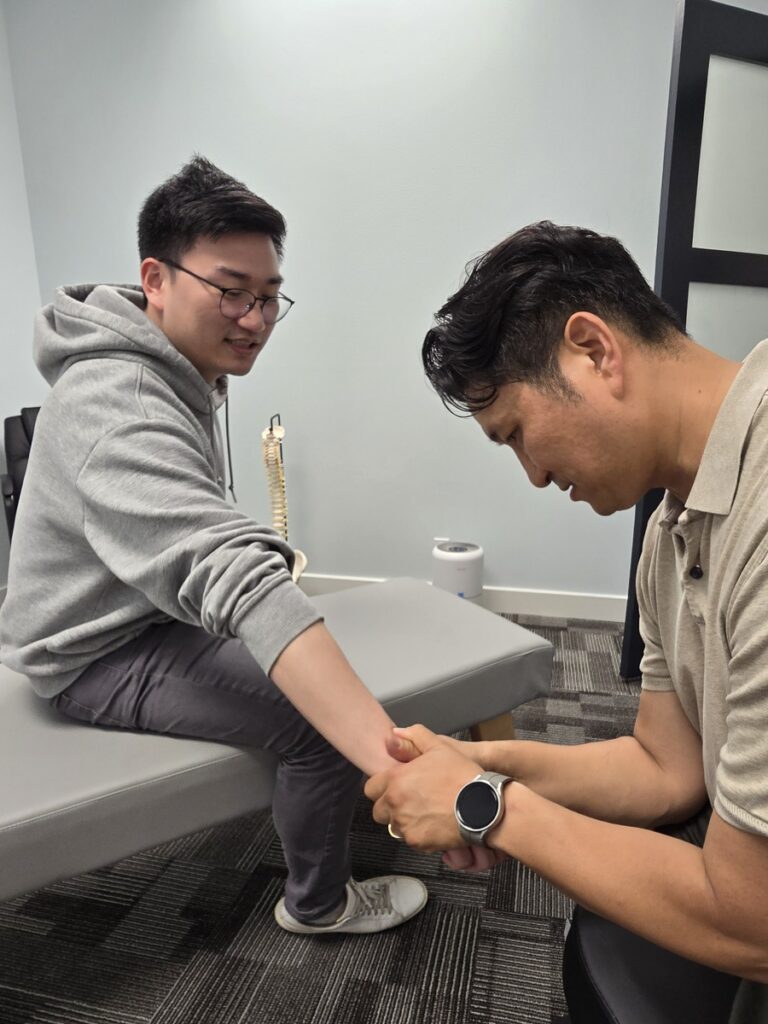
Dr. Jae ho Roh begins with a thorough evaluation to understand each patient’s unique situation. This typically involves a postural assessment, a discussion of daily habits and screen time, and a hands-on examination of the cervical spine and surrounding musculature. From there, a personalized care plan is developed that addresses the patient’s specific needs.

Spinal adjustments — also known as spinal manipulation — are a core component of chiropractic care for text neck. These gentle, targeted movements help restore proper alignment to the cervical spine, reduce joint restriction, and relieve pressure on the surrounding nerves and soft tissues. Research from organizations like the American Chiropractic Association and bodies such as the National Center for Complementary and Integrative Health suggests that spinal manipulation can be an effective approach for managing cervical spine-related pain.
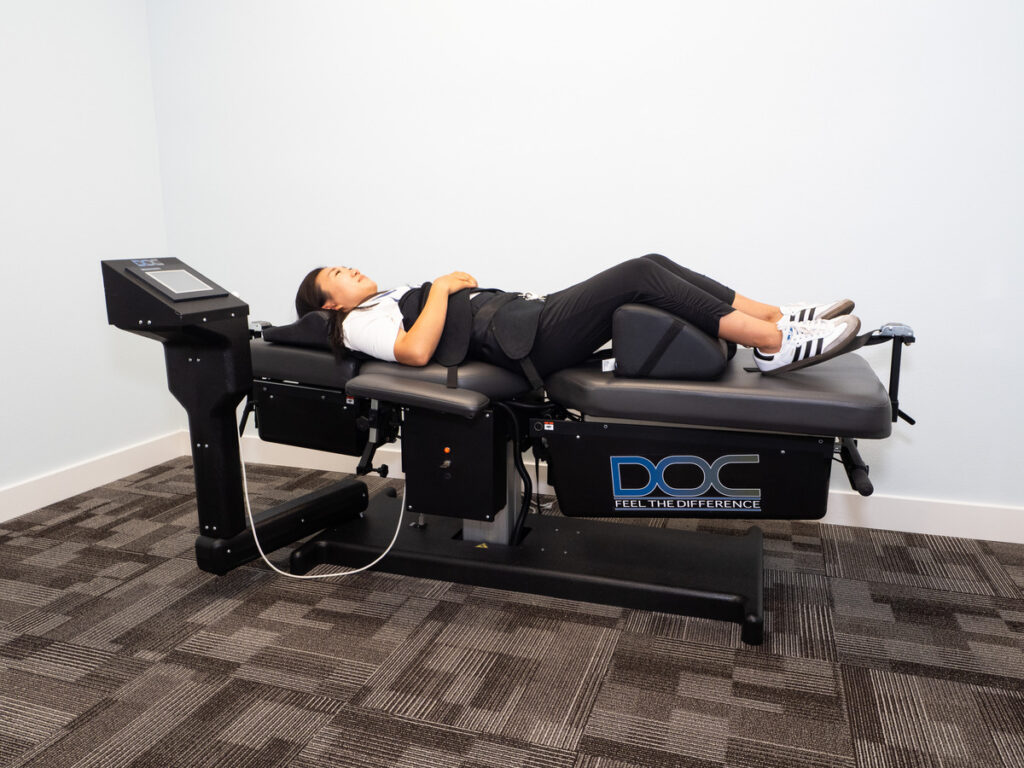
In addition to adjustments, care at Revive Chiropractic may include soft tissue work to address muscle tension, rehabilitative exercises to strengthen the postural muscles that support the head and neck, and patient education on how to modify habits and ergonomics to prevent recurrence. It’s a comprehensive approach that treats the whole person — not just the symptom.
Practical Tips to Protect Your Neck
The good news about text neck is that small, consistent changes in your daily habits can make a real difference. You don’t need to give up your phone — you just need to be more mindful about how you use it.
The most impactful change you can make is raising your phone to eye level whenever possible. Rather than dropping your head to look at your screen, bring the screen up to meet your gaze. It feels awkward at first, but your neck will thank you. The same principle applies to laptops and tablets — using a stand to raise the screen helps keep your head in a more neutral position.
Taking regular breaks is equally important. A general guideline that many healthcare providers recommend is taking a short break every 20 to 30 minutes of screen time. Use that break to stand up, roll your shoulders back, and gently move your neck through its range of motion. These micro-breaks allow your muscles to reset and prevent the buildup of tension that leads to pain.
Strengthening the muscles that support your neck and upper back is another key strategy. Simple exercises like chin tucks — where you gently draw your chin straight back to align your head over your shoulders — can help counteract the forward head drift caused by prolonged phone use. Dr. Jae ho Roh and the team at Revive Chiropractic in Sunnyvale, CA can guide you through the right exercises for your specific posture pattern.
Finally, be aware of your overall workstation setup. Whether you’re working from home or at an office in Sunnyvale, your desk, chair, and monitor height all play a role in how your spine is positioned throughout the day. Ergonomic adjustments to your environment can significantly reduce the cumulative strain on your neck.
When to See a Chiropractor
If you’ve been experiencing neck pain, stiffness, or headaches that come and go — particularly if they seem worse after long periods of phone or computer use — it’s a good idea to get evaluated. You don’t need to be in severe pain to benefit from chiropractic care. In fact, catching postural problems early is one of the best ways to prevent them from developing into more serious issues down the road.
There are some symptoms, however, that should prompt you to seek care promptly. These include sharp or shooting pain in the neck, numbness or tingling that travels into the arms, hands, or fingers, significant weakness in the arms, or persistent pain that doesn’t improve with rest. These may indicate nerve involvement or other conditions that require a more thorough evaluation.
If you experience severe headaches that come on suddenly, loss of coordination, or any neurological symptoms such as difficulty speaking or changes in vision, these are red flags that warrant immediate medical attention — not chiropractic care. Always trust your instincts and err on the side of caution when something feels significantly wrong.
|
Symptom / Situation |
Recommended Action |
|---|---|
|
Mild neck stiffness after phone use |
Modify habits, try chin tucks, monitor symptoms |
|
Recurring neck pain or tension headaches |
Schedule a chiropractic evaluation |
|
Tingling or numbness into the arms/hands |
Seek chiropractic evaluation promptly |
|
Chiropractic assessment and postural correction |
|
|
Sharp, shooting pain down the arm |
Prompt evaluation — possible nerve involvement |
|
Sudden severe headache, vision changes, or neurological symptoms |
Seek emergency medical care immediately |
Myths vs. Facts About Text Neck
Myth: Text neck only affects teenagers and young people.
Fact: While younger generations tend to spend more time on their phones, text neck affects people of all ages. Adults who spend long hours at a computer, checking emails on a tablet, or scrolling through social media are just as susceptible. At Revive Chiropractic, Dr. Jae ho Roh sees patients ranging from teens to retirees with posture-related cervical issues.
Myth: If it’s not causing severe pain, it’s not a real problem.
Fact: Mild, recurring discomfort is your body’s early warning system. Text neck often progresses slowly, which means people tend to ignore it until the pain becomes significant. By the time someone is in serious pain, structural changes may already be underway. Early evaluation is always the smarter approach.
Myth: Stretching alone will fix text neck.
Fact: Stretching can provide temporary relief and is a helpful part of a management plan, but it doesn’t address spinal misalignment, disc involvement, or the underlying postural patterns that are driving the problem. A comprehensive approach that includes professional evaluation, spinal care, and targeted strengthening is typically more effective for lasting results.
Myth: Chiropractic adjustments are dangerous for the neck.
Fact: Cervical chiropractic adjustments, when performed by a licensed and trained chiropractor, are considered a safe and established conservative care option for neck pain. Leading health organizations, including the American College of Physicians, have recognized spinal manipulation as part of a reasonable first-line approach for musculoskeletal neck pain. As with any healthcare intervention, your chiropractor will assess whether adjustments are appropriate for your individual situation.
Myth: You need to give up your phone entirely to fix text neck.
Fact: You don’t need to go screen-free — you need to use your screen more wisely. Simple changes like raising your phone to eye level, taking regular movement breaks, and doing posture-strengthening exercises can dramatically reduce the strain on your cervical spine without having to give up your device.
Final Thoughts: Your Neck Deserves Attention
Text neck is one of those modern-day conditions that has quietly become incredibly common — and it’s one that the team at Revive Chiropractic in Sunnyvale, CA is well-equipped to help you address. The posture habits we build around our devices have real consequences for the health of our spine, but those consequences are not inevitable. With the right awareness, the right habits, and the right professional support, you can protect your neck and keep your spine healthy for the long haul.
Here in Sunnyvale, we understand that life is busy and screens are unavoidable. Whether you’re commuting, working in tech, or just catching up on the news, your phone is part of your daily life — and that’s okay. What matters is that you’re taking steps to offset the strain that comes with it. If you’ve been dealing with neck pain, stiffness, or headaches and haven’t found lasting relief, consider reaching out to Revive Chiropractic. Dr. Jae ho Roh is here to help you understand what’s happening in your spine and to work with you on a path forward that makes sense for your life.
You don’t have to live with the ache. And you don’t have to figure it out on your own. We’re proud to be part of the Sunnyvale community, and we’re here whenever you’re ready.
Frequently Asked Questions About Text Neck
Can text neck cause permanent damage?
If left unaddressed over many years, text neck can contribute to structural changes in the cervical spine, including disc degeneration and loss of the natural cervical curve. However, when caught early and managed properly, many of these effects can be minimized or reversed. Early evaluation and consistent postural habits are key.
How long does it take to correct text neck?
The timeline varies depending on how long the condition has been developing, the severity of postural changes, and how consistently a person follows their care plan. Some patients notice improvement in symptoms within a few weeks of beginning chiropractic care and habit modification. More advanced cases may require a longer-term approach.
Is text neck a real medical diagnosis?
“Text neck” is a commonly used term in the chiropractic and physical therapy communities to describe the pattern of overuse and strain caused by prolonged forward head posture during device use. While it may not appear in a formal diagnostic manual, the underlying conditions it describes — cervical strain, forward head posture, and related musculoskeletal issues — are very real and well-documented.
Can children develop text neck?
Yes. In fact, children and adolescents may be particularly vulnerable because their spines are still developing. Heavy backpacks combined with hours of phone or tablet use can place significant stress on a young spine. Parents should encourage regular breaks and proper device habits from an early age.
What’s the difference between text neck and a pinched nerve?
Text neck refers to the overall pattern of strain and misalignment from forward head posture, while a pinched nerve (also called nerve compression or radiculopathy) is a specific condition where a nerve in the cervical spine is compressed — often causing shooting pain, tingling, or numbness into the arm. Text neck can contribute to conditions that lead to a pinched nerve if left unmanaged.
Does chiropractic care help with text neck headaches?
Evidence suggests that chiropractic care, including spinal manipulation and soft tissue therapy, can be helpful in managing tension-type headaches related to cervical spine dysfunction. Many patients at Revive Chiropractic in Sunnyvale report improvement in headache frequency and intensity as part of their overall cervical care. Individual results vary, and your care plan will be tailored to your specific needs.
TL;DR — Key Takeaways
-
Text neck is caused by prolonged forward head posture during phone, tablet, or computer use, placing excess strain on the cervical spine.
-
Symptoms include neck pain, tension headaches, upper back stiffness, and sometimes tingling into the arms — all of which can worsen over time if not addressed.
-
Long-term effects can include disc degeneration and loss of the natural cervical curve, making early evaluation and care important.
-
Chiropractic care at Revive Chiropractic in Sunnyvale, CA can help restore cervical alignment, relieve muscle tension, and support postural correction through a personalized, drug-free approach.
-
Simple daily habits — like raising your phone to eye level, taking movement breaks, and doing chin tuck exercises — can go a long way toward protecting your neck from ongoing strain.