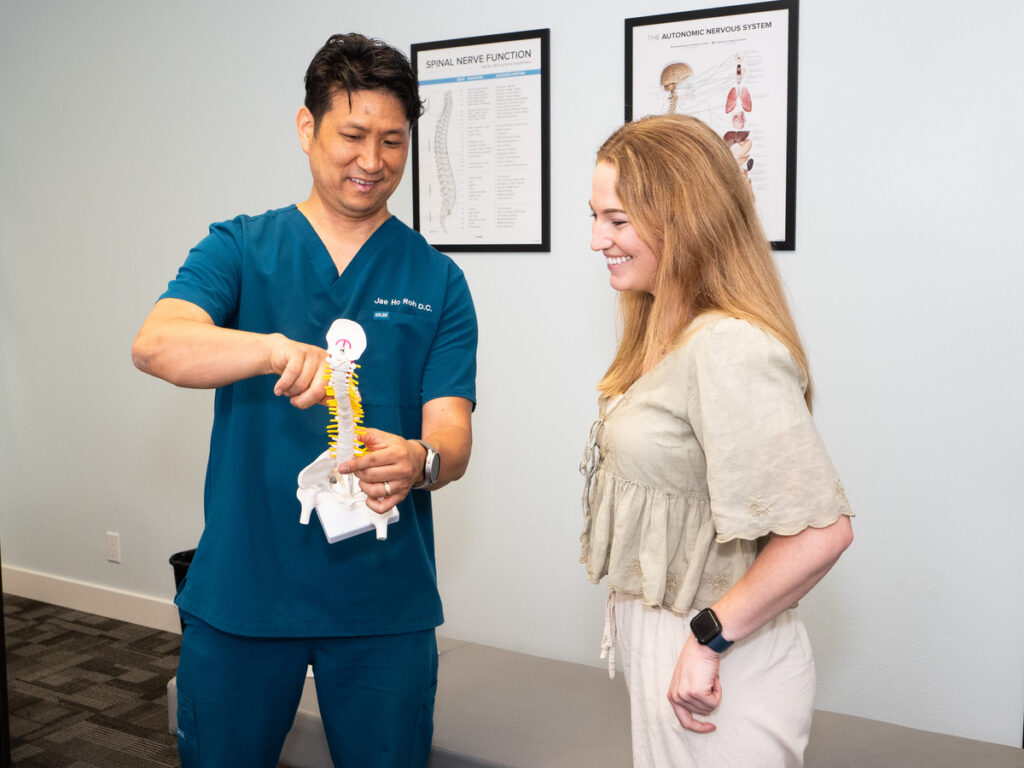
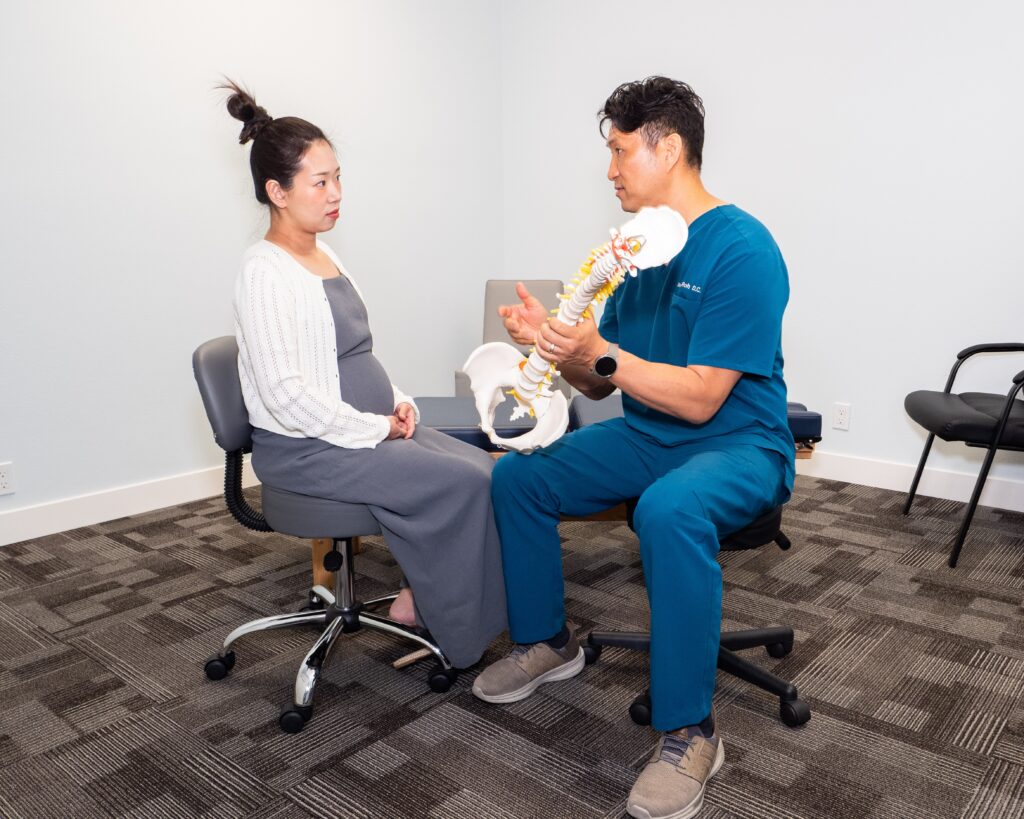
As a local chiropractor, I understand that many of you are grappling with back pain caused by poor posture, especially in our modern, sedentary lifestyles. You’re not alone in this struggle. Fortunately, there are effective, natural strategies that can help you restore comfort and stability to your life.
First, we can focus on strengthening exercises that specifically target the muscles supporting your spine. These exercises not only alleviate pain but also promote better posture over time.
Next, let’s talk about ergonomic workspace adjustments. A few simple changes to your desk setup can make a significant difference in how you carry yourself throughout the day and can help prevent the strain that leads to discomfort.
Lastly, integrating mindfulness techniques into your daily routine can enhance your awareness of your posture. By cultivating a mindful approach, you can learn to recognize and correct your posture, making the healing process more effective.
Curious about how these solutions can be tailored to your individual needs? Let’s delve into each of these strategies in detail during your next visit. Together, we can embark on a journey towards improved posture and reduced pain.
Strengthening Exercises for Better Posture
As a local chiropractor, I want to share with you how incorporating strengthening exercises into your routine can significantly enhance your posture and alleviate back pain.
It’s important to focus on exercises that engage key muscle groups, particularly your core, back, and shoulders. I recommend planks, bridges, and bent-over rows as effective options. These exercises not only build strength but also contribute to greater stability, which is essential for supporting your spine.
Aim to integrate these exercises into your routine two to three times a week, and as you become stronger, gradually increase the intensity. It’s crucial to prioritize proper form to prevent injuries; performing fewer repetitions correctly is far more beneficial than doing many incorrectly.
Moreover, don’t overlook the importance of flexibility in your posture journey. Stretching your chest and hip flexors can alleviate tightness and further improve your posture.
Ergonomic Adjustments in Your Workspace
As a local chiropractor, I want to emphasize that improving your posture involves more than just strengthening your muscles; your workspace environment is equally important.
Begin by adjusting your chair height so that your feet rest flat on the floor, and your knees are aligned with your hips. This alignment helps maintain proper spinal posture. Your desk should be set so that your elbows form a 90-degree angle while you type, allowing for comfortable arm positioning.
If you’re using a computer, it’s crucial to position the monitor at eye level to prevent unnecessary strain on your neck. I recommend investing in an ergonomic chair that provides support for your lower back and promotes the natural curve of your spine. If your chair is too high, a footrest can help you achieve proper alignment. Additionally, a lumbar support cushion can offer extra support for your back.
Lastly, remember the importance of taking regular breaks. Stand up, stretch, and move around to alleviate tension and keep your body properly aligned.
Mindfulness and Body Awareness Techniques
As your local chiropractor, I want to emphasize that while making physical adjustments is essential for improving your posture, integrating mindfulness and body awareness techniques can significantly elevate your overall well-being.
These practices not only help you connect with your body but also play a vital role in reducing tension and fostering better alignment. Here are four techniques I encourage you to explore:
Breath Awareness: Spend a few moments focusing on your breath. Take a deep inhalation, allowing your abdomen to expand fully, and then exhale slowly, consciously releasing any tension in your back. This simple practice can create a sense of calm and enhance your spinal health.
Body Scanning: Find a comfortable position, lie down, and mentally scan your body from head to toe. Pay attention to areas where you may hold tension and make a deliberate effort to relax those muscles. This practice not only aids in relaxation but also helps you become more aware of your body.
Mindful Movement: Engage in gentle activities such as yoga or tai chi. These practices not only promote flexibility but also enhance your awareness of your body’s positioning in space, contributing to a healthier posture and reducing the risk of injury.
Posture Check-ins: Throughout your day, set reminders to check in on your posture. Take a moment to adjust your position as needed, ensuring you maintain a healthy alignment. This habit can lead to long-term benefits for your spine and overall health.
I’m a new patient here and Dr. Roh made me feel very comfortable from the first visit. I’ve been going to chiropractors my whole life and felt like I was in good hands as soon as I walked in. I love all the options he offers for treatment and have tried them all so far. I will be bringing my wife and kids here as well.
Scott D
Dr. Roh was outstanding, I explain my pain in my lower back, he knew exactly what I was going through.<br>He adjusted my back and Felt the difference right away.<br>When I come back to town, this will be my “must” stop before going back home.
Chronic case of sciatica. Dr Roh has been able to slowly eliminate the major discomfort. Now Im able to work full physical days at work, lately . Hoping to eliminate all pain by the time Im wrapped up with Dr Roh. Thank you Dr Roh !!
Dr. Roh has been so helpful since my car accident. My low back has feeling much better since coming here. I highly recommend revive chiropractic to anyone who is suffering from low back pain.
Great chiropractor. I’d been having some shoulder and back issues for a prolonged period, probably from desk work and weekend sports. Dr. Roh put me on a program for 2x/week for a while. He makes a few tactical adjustments each time and it’s worked well for me! Will continue to see Dr. Roh for general upkeep. I’m happy with the value and service at Revive chiropractor!
I have been seeing Dr. Roh for the last one month. I started having lower back pain in the morning, and I managed to work through the day. I scheduled an urgent appointment with Dr. Roh. He kindly accommodated my schedule and saw me. I continue seeing him once a week. After last week treatment, my whole body felt relaxed, tightness went away. His office assistant is very friendly too. I highly recommend Dr. Roh!
I was searching for a chiropractor near my home and found Revive Chiropractic. From the moment I walked in, the experience was very positive. The doctor took the time to listen carefully to my concerns and explained everything clearly.<br><br>The treatment was gentle and effective, and I felt significantly better afterward. It’s clear that he truly cares about his patients and focuses on helping them feel comfortable during the process.<br><br>If you’re looking for a chiropractor who is knowledgeable, attentive, and compassionate, I would definitely recommend Revive Chiropractic.
Dr. Roh at Revive Chiropractic is amazing. He helped me recover from a lower back workout injury with a great adjustment, a solid recovery plan, and helpful tips for a faster turnaround. Professional, knowledgeable, and highly effective!
While I was researching chiropractors in my area, I came across Dr. Roh. I came in for an evaluation, and have been receiving care for him for sometime now. He listened to my areas of concern, and took the time to explain my pain, and created a treatment plan for me. My pain has decreased significantly! Dr. Roh is attentive, compassionate, and professional. I, highly, recommend him.
Came in with really bad, lower back pain, thinking it was sciatica Help me figure out it was more of a pinched nerve after a few visits feeling a lot better
I’m very impressed with Dr Roh’s office. I came in with severe sciatica pain and weakness in lower extremities. After a few weeks I’ve already seen improvement in my mobility and the amount of time I can function on my feet. I’m excited to see what the next few months bring as I’ve never found relief for my symptoms until now. I definitely endorse Dr Roh for anyone that is having any issues with their back.
I was injured in a Car accident and suffered from lower back pain. The Dr explained to me what the issue was and I understood more of the severity. Dr was very polite understanding and professional. Highly recommended him.
I had si-joint pain and pregnancy is making it worse. The chiropractor definitely helps with my condition. Unfortunately I could not stay here until close to my delivery so I had to find another provider when I moved to China.
I’m very grateful to have Dr. Roh helping treat my hip pain, which had been causing me years of discomfort. He provided a detailed and thoughtful treatment plan, and my hip pain has been gone for quite some time now. I continue to come in as part of a long-term recovery plan and couldn’t be more satisfied with the care I’ve received.
Dr. Roh is wonderful to work with. Cordial and professional at all times. I came in two weeks ago after weeks of chronic migraines, having been to urgent care and the emergency room multiple times because my regular meds weren’t working. Dr. Roh has given me great relief. He offered multiple treatment options with no pressure tactics, and his office manager, Hannah is lovely.
I found Dr. Roh from Google and saw he had 5 star review and luckily was able to book a same day adjustment/exam. My back was treated with three different adjustment methods and fixed by the next day! I highly recommend Dr. Roh as a professional and experienced doctor.
Very grateful for Dr. Roh. We just moved to the area and were looking for a good chiro, and I’m so glad we found this place. The clinic is clean, welcoming, and I always feel relieved after each visit. I came in with a stiff lower back and neck, and every session has helped so much.
I’m a big guy 6.2 250 pounds<br>Not a lot of chiropractor I’ve went to was able to adjust my body so well. Knowing doc can do it for me he surly can do it for everyone. Clears my brain fog and my stiff neck and back.
Dr. Roh was great. I was traveling to town for work and had a back injury that needed urgent attention and Revive was able to help me the same day. Thanks!
I went to Dr Roh for a stiff neck after bad sleeping posture. He fixed the immediate pain after 2 treatments. Then the longer term treatment helped me gradually feel even better as I had the bad posture for a long time.
Dr. Roh has been great helping me alleviate some chronic pain. His office is conveniently located off Lawrence Expressway in Sunnyvale and I highly recommend Revive.
I was apprehensive about visiting a chiropractor and contemplated it for months to address my ailments. Dr. Roh understood the apprehension, addressed possible causes of my ailments and explained the treatment path clearly. The process has been great so far, and I’ve been feeling much better since the start of the treatment.
I highly recommend this chiropractic practice. I came in with multiple issues—an ankle, shoulder, and wrist injury—and am so pleased with the results. My mobility has improved significantly, and the treatment has been fantastic. The only downside is that they don't accept insurance, which can be inconvenient. However, they do offer discounted bulk packages, which helps with the cost.
“I had a great experience with Dr. Roh. From the moment I walked in, he was polite, attentive, and thorough. He took time to listen, explained the treatment plan in plain language, and checked in often to make sure I was comfortable. The adjustment was gentle yet effective - highly recommend!”
I had severe lower back pain from the left side of body after throwing baseball. Came here once. He adjusted me. The pain slowly disappeared in 2 days after adjustment. Feel a lot better now. Would highly recommend Dr. Roh!!!
I was experiencing severe back pain and went to El Camino Hospital and later Stanford, but neither was able to pinpoint the cause. Then I found Revive Chiropractic with Dr. Roh. He took the time to explain the root of my pain, and within just one week, he helped me return to my normal routine. Dr. Roh is very friendly, knowledgeable, and I’m truly grateful I found him. I highly recommend him to anyone struggling with back or neck pain.<br>Thank you so much Dr. Roh
Dr. Roh has been amazing to work with. After suffering a neck/back injury in a car accident, Dr. Roh has been incredible in getting me back to normal. He’s thorough, professional, and talented. Highly recommend.
I've been having serious back pain from work and Dr. Roh helped tremendously. His lovely assistant Hannah was very transparent with me and helped with the overall process. Would give 10/10!
A few months ago, I was in a car accident and dealing with persistent neck and back pain that made it hard to do even the simplest tasks. Visiting, Dr. Roh at Revive Chiropractic has honestly been one of the best decisions for my recovery.<br>From the very first appointment, Dr. Roh was professional, and knowledgeable. He performed a thorough assessment and explained what I have been going through, and has answered my questions or concerns.<br>Over the past several weeks, the adjustments, have made a huge difference. My mobility has improved, the pain has significantly decreased, and I don’t constantly take Tylenol for the pain. My family and friends have noticed a difference in my posture. Beyond the treatment, Hannah, the receptionist has been very welcoming.<br>I would highly recommend Dr. Roh to anyone recovering from an accident or dealing with chronic pain.
I found this place for my back pain. And it been help me a lot. Especially the spinal compresses machine. That one help a lot. I been to 2 other places and it didn’t help nothing for the pain. I really recommend this place