Back pain is one of the most common reasons people seek medical care — and in many cases, it doesn’t start with an injury. It starts with something far more subtle: the way we hold ourselves throughout the day. At Revive Chiropractic in Sunnyvale, CA, Dr. Jae ho Roh sees this pattern constantly. Patients come in frustrated, wondering why their back hurts when they haven’t done anything dramatic. The answer, more often than not, comes down to spinal health and posture. Understanding the connection between the two is one of the most powerful steps you can take toward a pain-free life.
What Is Spinal Health and Why Does Posture Matter?
Spinal health refers to the structural integrity, alignment, and function of the vertebral column — the central support system of your entire body. Posture is the position in which you hold your body while standing, sitting, or moving. When posture is consistently poor, it places uneven mechanical stress on the spine, gradually leading to muscle imbalances, joint dysfunction, and — eventually — back pain.
- What Is Spinal Health?
- How Poor Posture Leads to Back Pain
- Common Causes of Poor Posture in Sunnyvale
- How Chiropractic Care Fits In
- Practical Tips for Better Posture and Spinal Health
- When to See a Chiropractor
- Posture Mistakes vs. Corrections
- Myths vs. Facts About Spinal Health and Posture
- Final Thoughts
- Frequently Asked Questions
- TL;DR Summary
What Is Spinal Health? Understanding Your Body’s Foundation
Your spine is far more than a stack of bones. It’s a complex, dynamic structure made up of 33 vertebrae, intervertebral discs that act as cushions, an intricate network of muscles and ligaments, and the spinal cord — the communication highway between your brain and the rest of your body. When all of these components work together in proper alignment, your body moves efficiently and without pain.
The spine has three natural curves: a forward curve in the neck (cervical lordosis), a backward curve in the mid-back (thoracic kyphosis), and a forward curve in the lower back (lumbar lordosis). These curves are not imperfections — they are engineered by nature to distribute mechanical load, absorb impact, and allow fluid movement. Problems arise when these curves are exaggerated, flattened, or shifted out of their healthy range, often as a direct result of poor postural habits.
Dr. Jae ho Roh often explains to patients at Revive Chiropractic that spinal health is not just about avoiding pain today — it’s about maintaining mobility, nerve function, and quality of life for decades to come. The earlier you understand and respect your spine, the better positioned you are to prevent chronic issues down the road.
How Poor Posture Leads to Back Pain
Posture affects the spine in ways that are both immediate and cumulative. When you sit hunched over a desk, crane your neck toward a screen, or stand with your weight shifted to one side for hours at a time, your spine is under sustained, uneven pressure. Over time, this causes certain muscles to become overworked and tight, while opposing muscles weaken from underuse — a phenomenon commonly referred to as muscle imbalance.
This imbalance creates a cascade of problems. Tight hip flexors tilt the pelvis forward, increasing stress on the lumbar spine. Weak core muscles fail to provide adequate support for the lower back. Rounded shoulders pull the thoracic spine into excessive flexion, compressing the discs and straining the muscles between the shoulder blades. Each of these patterns, left unaddressed, makes back pain not just likely — but almost inevitable.
Research published through organizations like the National Institutes of Health suggests that musculoskeletal disorders — including those related to posture — are among the leading causes of disability worldwide. While chiropractic care doesn’t claim to cure all back pain, evidence indicates that spinal manipulation and posture-focused care can play a meaningful role in managing and preventing pain for many individuals.
What makes this especially relevant here in Sunnyvale is the nature of work in this region. Silicon Valley is home to countless tech professionals, engineers, and desk workers who spend the majority of their day seated and focused on screens. That environment, as productive as it is, creates the perfect conditions for postural stress to accumulate quietly over months and years.
Spinal Health and Posture Video
Common Causes of Poor Posture in Sunnyvale
Poor posture rarely has a single cause. It tends to develop from a combination of lifestyle habits, environmental factors, and physical conditions. Here in Sunnyvale, CA, some of the most common contributors Dr. Jae ho Roh encounters include prolonged desk work, long commutes, overuse of smartphones, and a lack of movement variety throughout the day.
Prolonged sitting is perhaps the biggest culprit. The human body was not designed to remain stationary for eight or more hours a day. When you sit for extended periods — especially in a chair that doesn’t support proper alignment — the lumbar curve tends to flatten, the pelvis tilts backward, and the entire spine begins to compensate. The neck juts forward to bring the eyes closer to the screen, adding significant mechanical load to the cervical spine for every inch of forward head posture.
Smartphone use is another increasingly significant factor. Looking down at a phone for even thirty minutes at a time places several times the normal weight load on the cervical spine. Multiply that across dozens of daily sessions, and the cumulative strain becomes substantial. This pattern, sometimes called “tech neck,” has become remarkably common among younger adults and teenagers — groups that weren’t traditionally considered at high risk for cervical spine issues.
Beyond screens and sitting, factors like weak core strength, poorly fitted footwear, an unsupportive mattress, stress-related muscle tension, and even emotional posture — the way we physically carry worry or fatigue — all contribute to how the spine is loaded and held over time.
How Chiropractic Care Fits Into Spinal Health and Posture
Chiropractic care is a non-invasive, drug-free approach to addressing the structural and functional issues that contribute to back pain and poor posture. At Revive Chiropractic in Sunnyvale, CA, Dr. Jae ho Roh uses a thorough evaluation process to understand each patient’s unique spinal alignment, movement patterns, muscle function, and history before recommending any course of care.
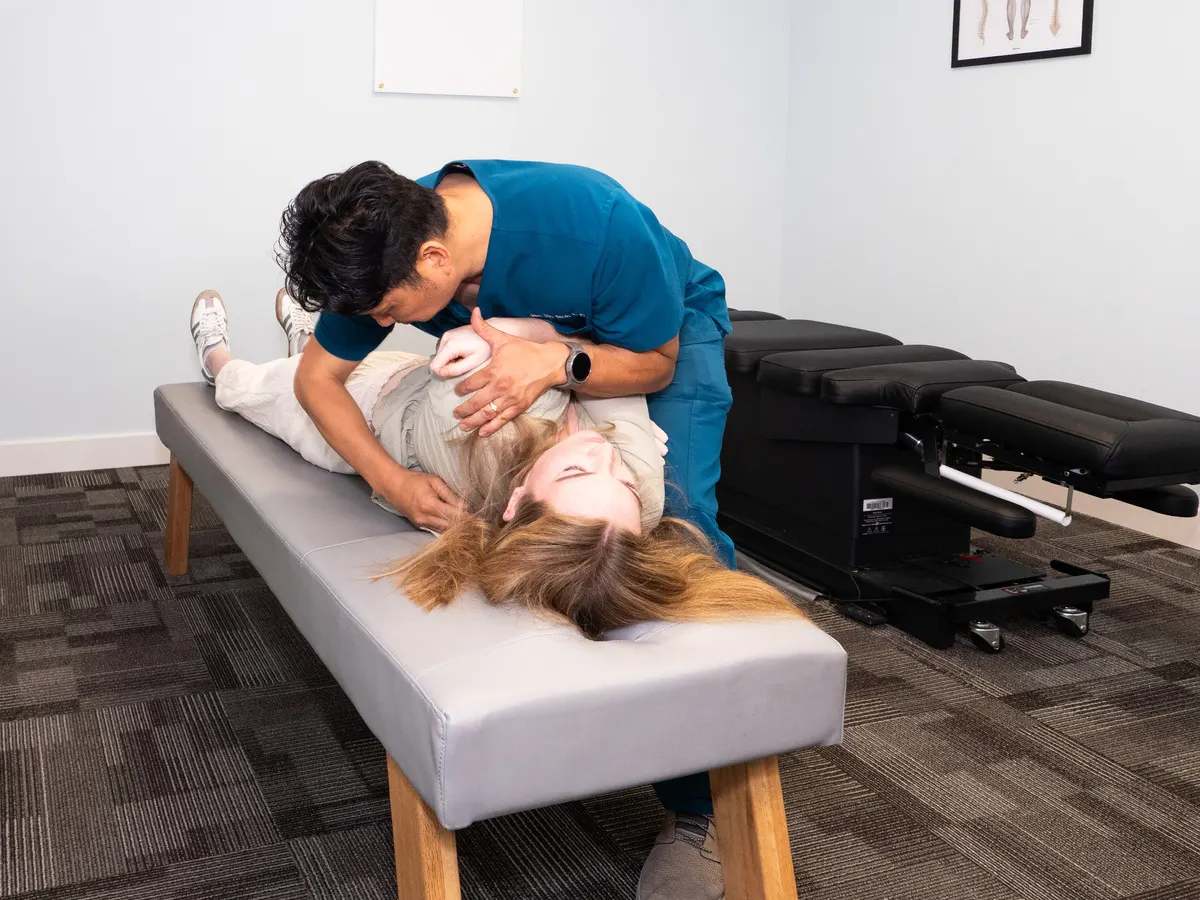
Chiropractic adjustments — also called spinal manipulations — involve the application of precise, controlled force to specific joints of the spine. The goal is to restore proper joint mobility, reduce mechanical irritation to surrounding nerves and soft tissues, and help the spine function more efficiently. For many patients, this results in a noticeable reduction in pain, improved range of motion, and a greater sense of ease in everyday movement.
Beyond adjustments, chiropractic care often includes postural assessment and education, corrective exercises, ergonomic guidance, and soft tissue work. This multi-faceted approach is what distinguishes chiropractic from simply “cracking backs.” The American Chiropractic Association and several clinical guidelines — including those from the American College of Physicians — recognize spinal manipulation as a recommended conservative option for managing certain types of back pain.
At Revive Chiropractic, care is designed to be collaborative and empowering. Patients are not simply passive recipients of treatment — they are educated partners in their own spinal health. That philosophy makes a real difference in long-term outcomes.
Practical Tips for Better Posture and Spinal Health
Small daily habits have an outsized impact on spinal health over time. The good news is that many of the most effective interventions are simple to implement and don’t require expensive equipment. Here are some of the most practical recommendations Dr. Jae ho Roh shares with patients at Revive Chiropractic in Sunnyvale:
Set up your workstation intentionally. Your monitor should be at eye level so your neck stays neutral. Your chair should support the natural lumbar curve, with your feet flat on the floor and your knees at approximately a 90-degree angle. Your keyboard and mouse should be positioned so your elbows stay close to your body, not reaching forward or flaring outward.
Move regularly throughout the day. Setting a timer to stand, stretch, or walk briefly every 30 to 45 minutes is one of the most effective things you can do for your spine. Even 60 seconds of movement can reset muscle tension and restore circulation to the discs.
Strengthen your core — not just your abs. True core strength involves the deep stabilizing muscles of the abdomen, back, and hips working together. Exercises like dead bugs, bird dogs, and glute bridges support spinal stability without placing excessive load on the joints. If you’re unsure where to start, a chiropractor or physical therapist can guide you safely.
Be mindful of sleep posture. Sleeping on your back with a pillow under your knees or on your side with a pillow between your knees are generally considered the most spine-friendly positions. Sleeping on your stomach is typically the least supportive option for spinal alignment.
Breathe deeply and manage stress. This one surprises many patients. Chronic stress creates persistent muscle tension, particularly in the neck, upper back, and shoulders. Diaphragmatic breathing, mindfulness practices, and even regular walks in Sunnyvale’s beautiful parks can help release this tension and support better postural habits.
When to See a Chiropractor for Spinal Health and Posture
You don’t need to be in severe pain to benefit from chiropractic care. Many patients visit Revive Chiropractic in Sunnyvale, CA simply because they want to be proactive — they notice stiffness in the morning, a dull ache that returns after sitting, or a gradual loss of flexibility they’d like to address before it becomes something more serious. These are all good reasons to schedule an evaluation.
That said, there are specific signs that suggest sooner is better. Persistent neck or back pain that hasn’t resolved on its own after a week or two, discomfort that disrupts your sleep, pain that radiates down your arm or leg, or a noticeable change in your posture or gait — all of these warrant a professional assessment. The sooner the underlying cause is identified, the more options you have for conservative, non-invasive care.
There are also situations where chiropractic care alone may not be sufficient and medical attention should be sought promptly. These include severe or worsening neurological symptoms (like sudden weakness, numbness, or loss of bladder or bowel control), pain following a significant trauma, or symptoms that suggest something beyond a musculoskeletal cause. A good chiropractor will always refer patients appropriately and work collaboratively within the broader healthcare system when needed.
Posture Mistakes vs. Corrections
| Common Posture Mistake | What’s Happening in the Spine | Recommended Correction |
|---|---|---|
| Forward head posture (“tech neck”) | Increased load on the cervical spine; muscle strain in the neck and upper back | Raise screen to eye level; perform chin tucks to retrain cervical alignment |
| Slouching while seated | Lumbar curve flattens; disc pressure increases; hip flexors tighten | Use lumbar support; sit with hips slightly higher than knees; take movement breaks |
| Rounding the shoulders | Thoracic kyphosis increases; chest muscles shorten; upper back muscles weaken | Perform chest-opening stretches; strengthen mid-back; check keyboard and mouse placement |
| Standing with weight on one leg | Pelvic tilt and lateral spinal shift; uneven muscle loading | Distribute weight evenly; use anti-fatigue mats if standing for long periods |
| Looking down at a phone | Dramatic increase in cervical spine load; disc compression | Raise phone to eye level; take frequent screen breaks; limit prolonged phone sessions |
Myths vs. Facts About Spinal Health and Posture
Myth: Back pain is just a normal part of getting older and can’t be prevented.
Fact: While the risk of certain spinal changes does increase with age, back pain is not an inevitable consequence of aging. Many age-related spinal changes are significantly influenced by lifestyle factors — including posture, movement habits, and activity levels — that are very much within our control. Conservative care and healthy habits can make a substantial difference at any age.
Myth: If you’re not in pain, your posture and spinal health are fine.
Fact: Pain is often one of the last signals the body sends. Postural stress, muscle imbalances, and joint dysfunction can be present for a long time before they become painful. Regular spinal check-ups — much like dental check-ups — can help identify and address issues before they reach the symptomatic stage.
Myth: Chiropractic adjustments are dangerous or can damage the spine.
Fact: Chiropractic care has an excellent safety record when performed by a licensed, trained chiropractor. Serious adverse events are considered rare. As with any healthcare intervention, a thorough evaluation is conducted beforehand to ensure the approach is appropriate for each individual patient.
Myth: Good posture means sitting perfectly upright and rigid for hours.
Fact: No single posture is ideal for extended periods. The human spine is designed for movement, not static positions. The goal is to vary your posture regularly, support natural spinal curves, and move frequently — not to hold one “correct” position indefinitely.
Myth: You only need to see a chiropractor when something is wrong.
Fact: Many patients at Revive Chiropractic in Sunnyvale, CA visit for maintenance and wellness care — not just acute pain. Preventive check-ins can help maintain spinal mobility, catch developing issues early, and support overall musculoskeletal health as part of a proactive lifestyle.
Final Thoughts from Revive Chiropractic in Sunnyvale, CA
Your spine is at the center of everything you do — the way you work, the way you move, the way you feel. Here in Sunnyvale, so many of us live fast-paced, screen-heavy lives that quietly take a toll on our spinal health over time. But the great news is that the same lifestyle that creates these patterns can be adjusted to support them. Small, consistent changes in posture, movement, and self-awareness can make an enormous difference.
At Revive Chiropractic, Dr. Jae ho Roh and the team are committed to helping the Sunnyvale community understand and protect their spinal health — not just during moments of crisis, but as an ongoing practice of care. Whether you’ve been dealing with nagging back pain for months or you simply want to be proactive about your long-term wellbeing, there’s a place for you here.
Your back doesn’t have to hurt. And if it does, it doesn’t have to stay that way. Education, good habits, and the right professional support can take you a long way toward a healthier, more comfortable life. We’re here to help you every step of that journey.
Frequently Asked Questions
How long does it take to correct poor posture with chiropractic care?
The timeline varies depending on how long postural habits have been present, the degree of muscle imbalance, and how consistently a patient engages with home recommendations. Some patients notice meaningful improvement within a few weeks, while more chronic patterns may take several months to significantly shift. Dr. Jae ho Roh at Revive Chiropractic will assess your specific situation and outline a realistic plan.
Can chiropractic care help with tech neck from phone and computer use?
Yes, chiropractic care is commonly used to address the cervical spine strain associated with forward head posture and prolonged screen use. Treatment typically includes spinal adjustments, postural retraining, and guidance on ergonomic modifications to reduce recurrence. Many patients in the Sunnyvale tech community find this type of care especially relevant to their daily lives.
Is it normal for my back to feel stiff in the morning even without pain?
Mild morning stiffness that resolves within a few minutes of moving around is fairly common and often related to how the body rests and fluid shifts within the spinal discs overnight. However, stiffness that persists or is accompanied by other symptoms is worth having evaluated by a chiropractor to rule out underlying joint dysfunction.
Can children and teenagers benefit from chiropractic care for posture?
Yes. Postural habits are established early, and younger individuals who spend significant time on devices or in school settings can develop concerning patterns at a surprisingly young age. Chiropractic evaluation for young patients can help identify and address these patterns before they become entrenched. Care is always adapted to be appropriate for the age and size of the patient.
Do I need a referral to see a chiropractor in California?
No referral is needed to see a chiropractor in California. You can schedule directly with Revive Chiropractic in Sunnyvale, CA for an initial evaluation. During that first visit, Dr. Jae ho Roh will assess your spinal health, discuss your concerns, and determine whether chiropractic care is the right fit — or whether a referral to another provider would better serve your needs.
What’s the difference between chiropractic care and physical therapy for back pain?
Both are valuable conservative approaches to back pain, and they are not mutually exclusive. Chiropractic care focuses heavily on spinal alignment, joint mobility, and nervous system function, while physical therapy often emphasizes rehabilitation exercise and functional movement. Many patients benefit from both, and a good chiropractor will collaborate with other healthcare providers when appropriate.
TL;DR Summary
- Spinal health and posture are deeply connected — poor postural habits are one of the leading contributors to back pain, especially for desk workers and tech professionals in Sunnyvale, CA.
- The spine has natural curves that need to be supported, not distorted, by how we sit, stand, sleep, and move throughout the day.
- Common causes of postural stress include prolonged sitting, forward head posture from screens, weak core muscles, and lifestyle factors that limit movement variety.
- Chiropractic care at Revive Chiropractic offers a non-invasive, individualized approach to addressing spinal dysfunction, reducing pain, and improving posture through adjustments, education, and corrective guidance.
- You don’t have to wait until something hurts — proactive spinal care and smart daily habits are among the best tools available for preventing back pain long-term.